While she was teaching, her harp students won top prizes from many International Competitions, her piano student was two time semi-finalist from the International Competitions, and many of her students won college’s juries, received awards and scholarships for their undergraduate degrees and master’s degrees.
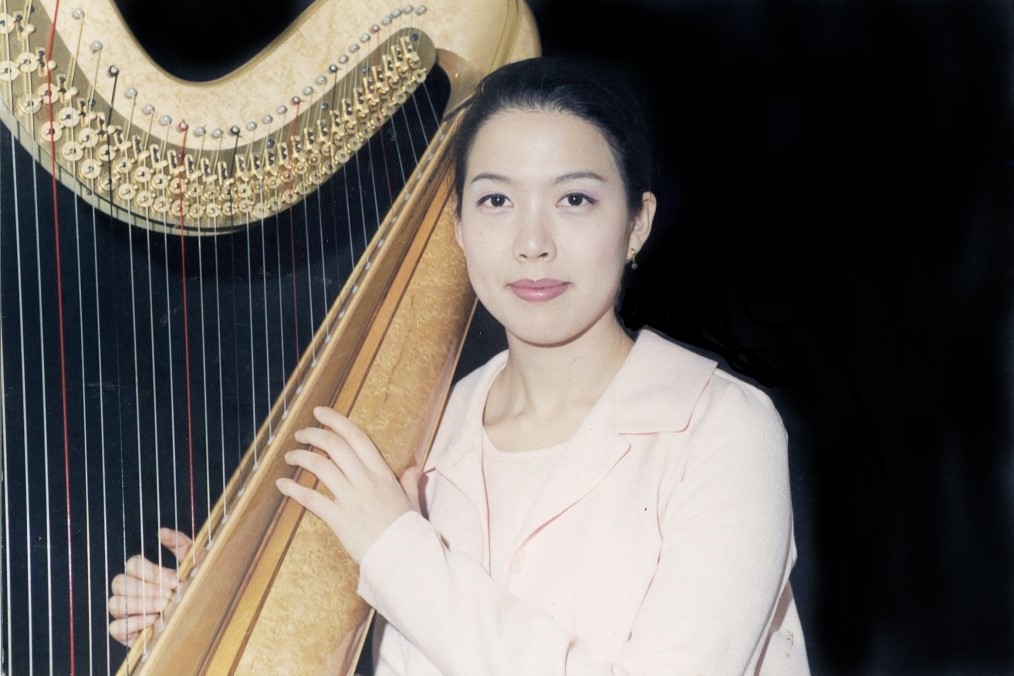
“I have been teaching both instruments – harp and piano – for over 35 years. I believe that a wonderful, considerate teacher can impact and influence many aspects of students’ life in positive ways. Apart from teaching students how to play the instruments, I also want to teach them how to live, how to think as a musician, and how to contribute to the beauty of the overall instruments’ sound.” – Dr. Chaerin Kim, 2026
TEACHING STATEMENT
Do I think teaching students how to read, write, count, and play with good technique is the only way to for them to be successful? While these aspects are important for beginners and intermediate-level musicians, once a student reaches an advanced level, that would imply they have nothing more to learn. I believe that even in the first lessons, a teacher’s approach cannot only focus on those basic elements.
Being a musician is so much more, and the first steps taken together as student and teacher dictate the rest of your shared journey, as well as their future. I want all my students be able to touch people’s hearts with messages delivered through their own musical languages, regardless of instrument or composition.
Over my teaching career, I have grown my studios from a single student to dozens – once breaking a record for fastest growth and demand. I have been honored to watch a student win the top prizes from an International Harp Competitions, another become a two-time semifinalist for International Piano Competitions, and many students pass college juries, receive awards and scholarships for their undergraduate and master’s degrees. However, the joy of teaching does not come just from helping students win awards.
I started teaching harp and piano over 20 years ago. In that time, I have been blessed to witness many talented students who worked hard, but the most important part of teaching for me is when I work with students with the most passion. I have taught students with a variety of physical and cognitive disabilities – whether it was blindness, ADHD, Tourette’s, arthritis, or a prior stroke – these students inspired me with their resiliency and adaptability. I have had students who were self-taught – their financial situation did not allow them to pay for lessons in childhood, but their dedication to music was palpable. All these young musicians touched my heart with their pure passion, and I feel my duty is to help these wonderful jewels be polished.
I believe that a wonderful, considerate teacher can impact and influence many aspects of students’ lives in positive ways. Apart from teaching students how to play the instruments, I want to teach them how to live, how to think as a musician, and how to contribute to the beauty of the instrument’s sound.
10 Rules of Teaching Philosophy
1. Patience
Patience is the cornerstone of meaningful teaching. Students progress at different speeds, and the slower pace of some should never prevent them from receiving equal attention. A teacher must first cultivate patience within themselves, then extend it to their students. When students sense that their teacher truly believes in them, even when progress is slow, they gain the confidence to persevere. I dedicate myself fully to each student, encouraging them to practice until assignments are mastered and to arrive prepared, ready to learn and grow.
2. Focus
Concentration is one of the most reliable predictors of success. I emphasize the development of focus in lessons, practice sessions, and performances, as it allows students to achieve more with less wasted effort. My teaching approach nurtures perseverance and resilience, reminding students that if they remain focused and consistent, success is only a matter of time. I encourage them not to give up easily and to view challenges as opportunities to strengthen their determination.
3. Health
Strong mental and physical health are essential to producing artistry of the highest level. A balanced state of body and mind allows musicians to perform with steadiness, energy, and authenticity. I encourage my students to maintain healthy habits that support their practice and performance, and to recognize that their overall well-being directly influences their artistic growth. When students are ill or fatigued, I ask them to reschedule lessons, because learning is most effective when they are in their best condition.
4. Solid Foundation
Talent alone is never enough; without solid fundamentals, even the most gifted student will eventually face limitations. I emphasize the careful cultivation of technique from the very beginning, so that posture, hand position, and tone production become second nature. This investment of time and discipline spares students from having to unlearn poor habits later. My role is to tailor the most effective method for each student, ensuring they progress with both confidence and technical security.
5. Motivation
Motivation fuels commitment. I want my students to enjoy their practice, but I also believe that if they find no joy in music, they should explore another path that truly inspires them. Excellence arises not only from skill but from genuine enthusiasm. To nurture motivation, I organize biannual student recitals in professional concert halls, where 30–60 of my students perform for audiences of 200–300. These performances instill a sense of pride, purpose, and accomplishment, motivating students to work diligently and to share their music with joy.
6. Doing Your Best
I teach students that their responsibility is not to be perfect, but to always prepare with integrity and do their personal best. Success lies in consistent improvement, whether in sight-reading, posture, or fingerings. By observing details such as shoulder and arm relaxation, I help students correct habits and focus on attainable goals. Striving for one’s best cultivates self-respect and provides the foundation for continuous growth.
7. Attending Concerts
Concert attendance is an essential complement to private study. Experiencing world-class performances broadens artistic imagination, while masterclasses provide insight into stage presentation and critique. Smaller concerts teach respect for the performance space and the role of the audience. From professional symphonies to beginner recitals, every performance offers valuable lessons. I remind my students that passion for music can be discovered in unexpected places and that learning occurs not only on stage but also in the concert hall.
8. Chamber Music & Orchestra Music
Music is not only a solo pursuit but also a communal art. I require students to engage with chamber music and orchestral repertoire, which strengthens listening skills, adaptability, and ensemble awareness. Learning to blend with other musicians develops sensitivity and teamwork, qualities that enrich both musical and personal growth.
9. True Love and Passion
Love for one’s instrument is indispensable. Without passion, even the most disciplined practice lacks vitality. My own devotion to harp and piano sustained me through challenges and fatigue, continually renewing my energy and purpose. I aim to help my students discover the same love, guiding them toward the instrument or repertoire that resonates most deeply with them. Passion not only makes the journey easier but elevates artistry to its highest level.
10. One thing I always tell my students!
I always remind my students that “slow and steady wins the race.” A naturally gifted student may be surpassed by the one who works with persistence, yet both can be surpassed by the student who truly loves what they do. Whether talented or hardworking, no one can excel without joy. If music brings happiness, it is worth pursuing wholeheartedly; if not, students should continue exploring until they find the field that does. Love is the ultimate source of motivation, and with it, all things are possible.
10 Teaching Practices
1. Metacognitive Learning Method
Self-monitoring fosters independence. I train students to reflect on what they know, what they do not, and how to bridge the gap. This method transforms them into active learners who diagnose problems, test solutions, and refine their process—whether analyzing mistakes in a theory class or addressing weak passages in performance.
2. Multimedia Learning Method
Students learn in different ways, and I use a range of media to engage them. Videos, images, and annotated scores provide clarity and sustain attention. For example, I create visual presentations with colored markings that help students follow complex scores, recognize stylistic differences, and retain material more effectively.
3. Emphasizing Equality
Every student deserves an equitable chance to learn, regardless of age, background, or ability. I create a classroom environment that supports diversity and inclusivity, ensuring that students with disabilities or less preparation receive the time and support they need. Equal treatment fosters a culture of respect and motivates all students to strive for their best.
4. Sincere Approach
Sincerity is as important as generosity. Students can sense whether a teacher’s kindness is authentic, and music itself demands the same honesty. I stress sincerity when studying scores, urging students to respect the markings and approach music with integrity and depth.
5. Dynamic Usages for Speed and Voice Tone
A monotone lecture risks disengagement. I vary my pacing, tone, and even silence, asking questions to involve students and sustain their focus. Just as music thrives on contrast, teaching benefits from dynamic variety that keeps lessons alive and engaging.
6. Humor vs Strictness
Humor creates a welcoming atmosphere, while structure ensures progress. I strive for a balance that makes students look forward to class while also respecting its rigor. Effective teaching requires both joy and discipline, so that students leave each class feeling enriched as well as inspired.
7. Assignments, Quizzes, and Exams
Assessment is vital for tracking growth. I provide frequent opportunities—assignments, quizzes, and exams—so that one poor result does not define a student’s progress. Regular evaluation encourages consistent effort and reveals areas needing improvement before it is too late.
8. Discussion Setting
Engaging students in discussion transforms them from passive listeners into active contributors. I present topics for open dialogue, guiding and moderating as needed, while encouraging students to share ideas and lead. This fosters critical thinking, confidence, and collaborative learning.
9. Extra Textbooks
Preparedness is important, but life sometimes intervenes. I keep extra textbooks in my office for emergencies, ensuring that students can participate fully even if they come unprepared. This small flexibility upholds expectations while showing understanding.
10. Encourage Students to be Great Colleagues
Learning is strengthened by community. I remind students that colleagues are not competitors, but partners in growth. By fostering respect and support among peers, I help them build relationships that enrich both their education and their lives. Together, they learn that music—and the world—thrives when we encourage one another.
TEACHING POSITIONS
- Music Theory Faculty, University of Massachusetts Boston | Fall 2026 – Present
- Piano and Harp Faculty, International Music Festival in Tallin, Estonia | July 2024 – Present
- Piano and Harp Faculty, International Music Festival in Bucharest, Romania | July 2024
- Piano Faculty, Shepard’s Heart School of Music, Florida | 2023
- Piano & Harp Faculty, Schlossakademie, Germany | January 2021 – Present
- Artist at TTF Entertainment Company in China | Dec 2020 – Present
- Group Keyboard Faculty, University of Massachusetts Boston | 2016 – 2019
- Piano Faculty, University of Massachusetts Boston | January 2014 – Present
- Harp Faculty, University of Massachusetts Boston | January 2012 – Present
- Full-time Faculty: Music History, Music Theory, Harp & Piano Faculty, Eastern Nazarene College, Massachusetts | January 2012 – August 2018
- Orchestra and Choir Conductor, Composition, Piano & Harp Teacher, Artist-in-Residence at Beechwood Knoll Elementary School, Massachusetts | 2011 – 2013
- Harp and Piano Instructor through the Office of Arts at Harvard University | Sep 2010 – Present
- Artistic Director of the USA International Music Competition | Sep 2009- Sep 2010
- Harp Department Chair, South Shore Conservatory, Massachusetts | 2009 – 2013
- Harp Faculty, Youth & Muse International Music Festival, Massachusetts | August 2012
- Educational Consultant, Musical Journey II | 2009 – 2010
- Artist Collaborator, projectSTEP, Boston Symphony Orchestra, Massachusetts | 2009
- Head of Harp Department, Piano Faculty, Adagio Music Academy, Massachusetts | 2009
- Teaching Assistant, Boston University, Massachusetts | 2008
- Teaching Assistant, Yale University, Connecticut | 2005
COURSES AND SEMESTERS TAUGHT
University of Massachusetts Boston – Lecturer
Applied Music Lessons – offered multiple courses depending on need and background of students for that semester. Courses were structured by student type: Piano, Music Majors; Harp, Music Majors; Piano, Music Minors/Elective; and Harp, Music Minors/Elective.
- Spring 2012 – 2 courses
- Summer 2012 – 2 courses
- Fall 2012 – 2 courses
- Spring 2013 – 2 courses
- Summer 2013 – 4 courses
- Fall 2013 – 2 courses
- Spring 2014 – 2 courses
- Summer 2014 – 4 courses
- Fall 2014 – 4 courses
- Spring 2015 – 4 courses
- Summer 2015 – 2 courses
- Fall 2015 – 2 courses
- Spring 2016 – 2 courses
- Summer 2016 – 4 courses
- Fall 2016 – 2 courses
- Spring 2017 – 2 courses
- Summer 2017 – 4 courses
- Fall 2017 – 3 courses
- Spring 2018 – 2 courses
- Summer 2018 – 4 courses
- Fall 2018 – 2 courses
- Spring 2019 – 2 courses
- Fall 2019 – 4 courses
- Summer 2020 – 4 courses
- Fall 2020 – 3 courses
- Spring 2021 – 4 courses
- Fall 2021 – 1 course
- Fall 2022 – 1 course
- Spring 2023 – 1 course
- Fall 2023 – 1 course
- Spring 2024 – 2 courses
- Summer 2024 – 2 courses
- Spring 2025 – 2 courses
- Summer 2025 – 1 course
- Fall 2025 – 2 courses
- Spring 2026 – 1 course
- Summer 2026 – 5 courses
- Fall 2026 – 3 courses
Music Theory I / MU121
Fall Semester 2026
Group Keyboard Lecture
- Fall Semester: 2016, 2017
- Spring Semester: 2017, 2018, 2019
Musical Theatre Class / THRART 303
Accompanist for Fall 2026
Substituted for Composition for Large Ensembles in 2025, and for Music Theory, Sight Reading, Ear Training and Sight Singing classes as needed during other colleague’s sabbatical in 2016
Eastern Nazarene College – Full-Time Professor
Music History I & II, split across two semesters
- Fall 2013 – Spring 2014
- Fall 2014 – Spring 2015
- Fall 2015 – Spring 2016
- Fall 2016 – Spring 2017
- Fall 2017 – Spring 2018
Music Theory I & II, split across two semesters
- Fall 2013 – Spring 2014
- Fall 2014 – Spring 2015
- Fall 2015 – Spring 2016
- Fall 2016 – Spring 2017
- Fall 2017 – Spring 2018
Applied Music Lessons, Piano
- Spring 2012 – Spring 2018
Applied Music Lessons, Harp
- Spring 2012 – Spring 2018
Harvard University –Piano and Harp Instructor through the Office of Arts
Applied Music Lessons, Harp
- Fall 2010 to Present, as requested
Applied Music Lessons, Piano
- Fall 2010 to Present, as requested
Schlossakademie – Piano and Harp Faculty
Applied Music Lessons, Harp
- Spring 2021 to Present, as requested
Applied Music Lessons, Piano
- Spring 2021 to Present, as requested
Shepherd’s Heart School of Music – Piano Faculty
Applied Music Lessons, Piano
- Spring 2023
South Shore Conservatory – Harp Department Chair
Applied Music Lessons, Harp
- Fall 2011 – Fall 2013
Quincy Public Schools – Orchestra and Choir Conductor, Piano & Harp Teacher, Artist-in-Residence
Music Theory
- Fall 2011 – Fall 2013
Piano
- Fall 2011 – Fall 2013
Harp
- Fall 2011 – Fall 2013
String Orchestra
- Fall 2011 – Fall 2013
Choir
- Fall 2011 – Fall 2013
Adagio Music School – Head of Harp Department, Piano Faculty
Applied Music Lessons, Piano
- Spring 2009 – Fall 2009
Applied Music Lessons, Harp
- Spring 2009 – Fall 2009
Boston University – Teaching Assistant
Applied Music Lessons – taught undergraduate students, graded papers
- Spring 2008 – Fall 2008
Yale University – Teaching Assistant
Applied Music Lessons – taught undergraduate students, graded papers
- Spring 2005 – Fall 2005